

Vaccine transportation
Cold-chain delivery for vaccines and immunobiological products, using the manufacturer’s required temperature range.

Refrigerated truck transport of medicines across Russia: our own fleet for large batches. For smaller shipments, courier delivery of medicines in a SafePack thermal container is the better fit.
Refrigerated truck transport means a dedicated temperature-controlled truck (full truckload, FTL) for large batches of medicines that need one stable temperature along the whole route. It is neither groupage (LTL) cargo, where your boxes travel together with other shippers' goods, nor a courier shipment (which is about urgency and small volumes): here a refrigerated truck (reefer) set to the required temperature is assigned to your boxes, pallets or an entire batch.
We ship on our own refrigerated trucks with on-board refrigeration units and SmartSensor temperature loggers. We hold the mode (+2…+8 or +5…+25 °C) throughout the journey and write it into the contract; the loggers record the temperature for the whole route, and the temperature report is kept in the request card in your personal account (Files tab) once it is attached to the order. We take −20 °C frozen cargo rarely and by arrangement — and, as a rule, it is more reliable to carry it in thermal containers. We work across Russia under a pharmaceutical licence for storing and transporting medicines, in line with Good Distribution Practice (GDP) and ISO standards.

A dedicated temperature-controlled truck is justified when there is a lot of cargo and the temperature mode must not be broken even for an hour.
Shipments of dozens of boxes and whole pallets between warehouses and to distribution centres, pharmacy chains and clinics — when the volume is already too large for a courier.
Vaccines, insulins, biologics and other temperature-sensitive products: we hold +2…+8 or +15…+25 °C steady along the whole route.
We carry plasma and frozen substances (−20 °C) by arrangement, but more often in SafePack thermal containers: there the sub-zero temperature holds more steadily when the cargo is reloaded. We will choose the most suitable method for your cargo.
For manufacturers and distributors that need predictable temperature-controlled delivery on one route — with our own vehicles, on a schedule, with documentation for inspections.
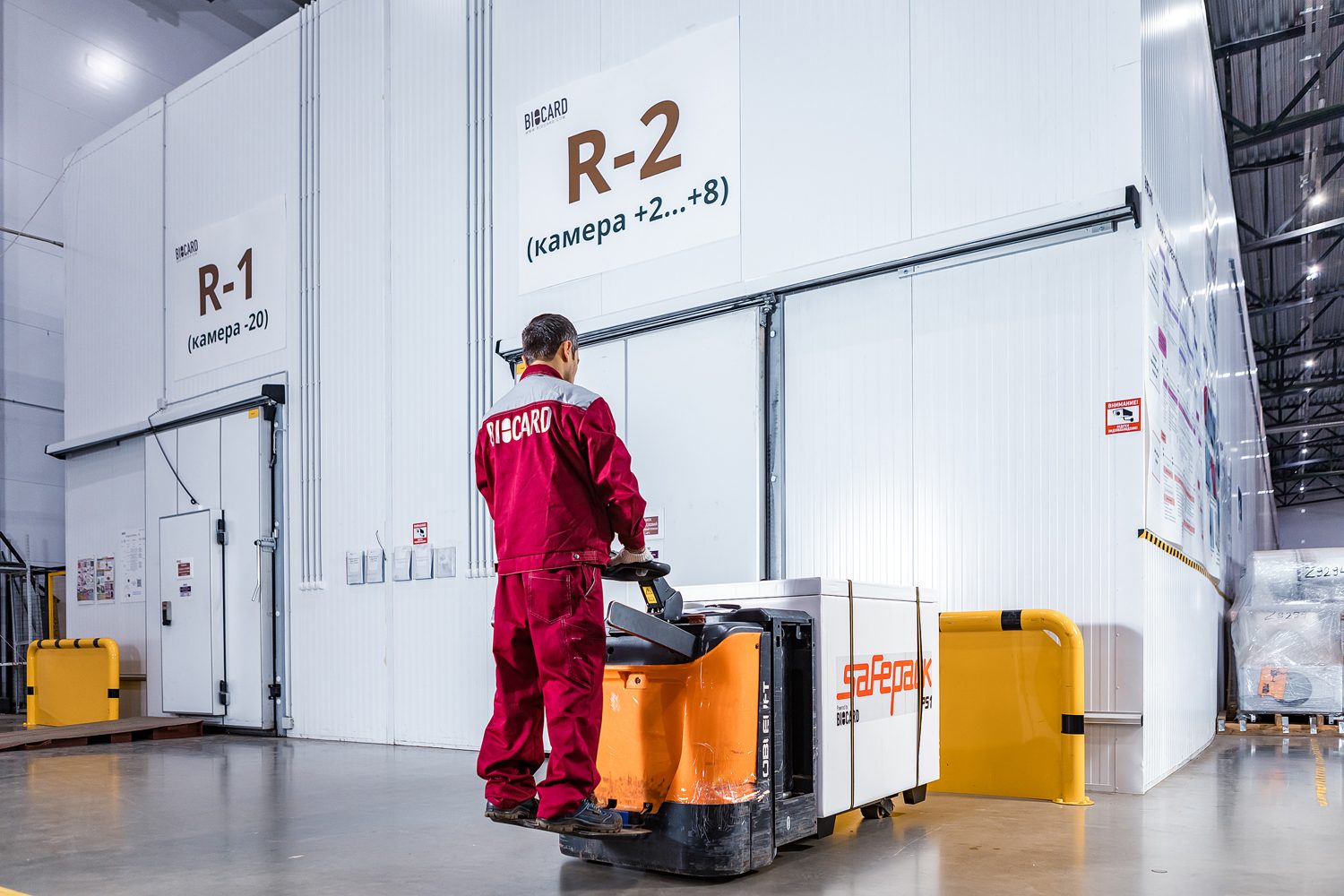
The main refrigerated mode: vaccines, insulins, biologics, immunobiological products.
A controlled mode for most dosage forms stored at room temperature.
Frozen cargo (plasma, frozen substances) — rarely and by arrangement; more often we carry it in thermal containers.
We write the mode into the contract and confirm it with sensor data recorded along the whole route. Deep freezing on dry ice (−70 °C) and liquid nitrogen at −196 °C are a separate service (see cryogenic logistics) and are not done by refrigerated truck.
We look at the volume, the type of products and the temperature required. We choose the truck and the mode for the task — we will suggest the most suitable option, and the decision stays with you.
We assign a refrigerated truck with checked refrigeration equipment, bring it to the set temperature before loading and place SmartSensor loggers in the cargo compartment.
We hold the mode along the whole route. The loggers record temperature, and also humidity, light and shocks. The data is read through a network of receivers in vehicles and warehouses, without opening the cargo.
We deliver across Russia and hand over the cargo with the closing documents. The sensor record for the route shows whether the temperature mode was kept from loading to hand-over and can be used in your quality check; the temperature report is kept in the request card in your personal account (Files tab) once it is attached to the order.
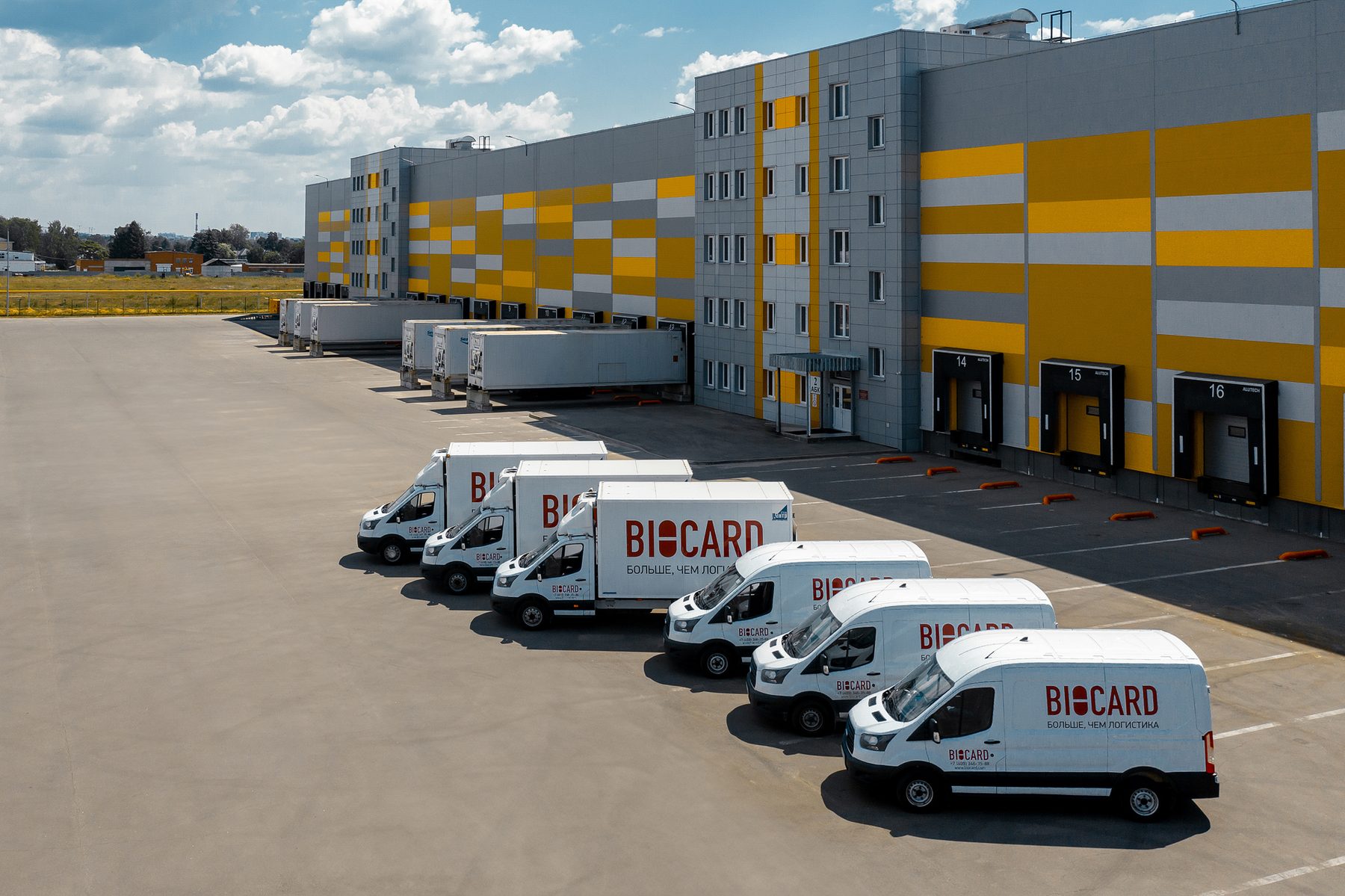
We mainly ship on our own vehicles rather than hiring a truck for each trip. On the main route we are responsible for the refrigeration equipment and the condition of the truck ourselves.
The required temperature is not a verbal promise but a commitment in the contract. We are responsible for keeping the mode throughout the journey.
SmartSensor loggers record temperature, humidity, light and shocks. The light reading shows whether the package was opened. The sensor record covers the whole route and is the source for the temperature report.
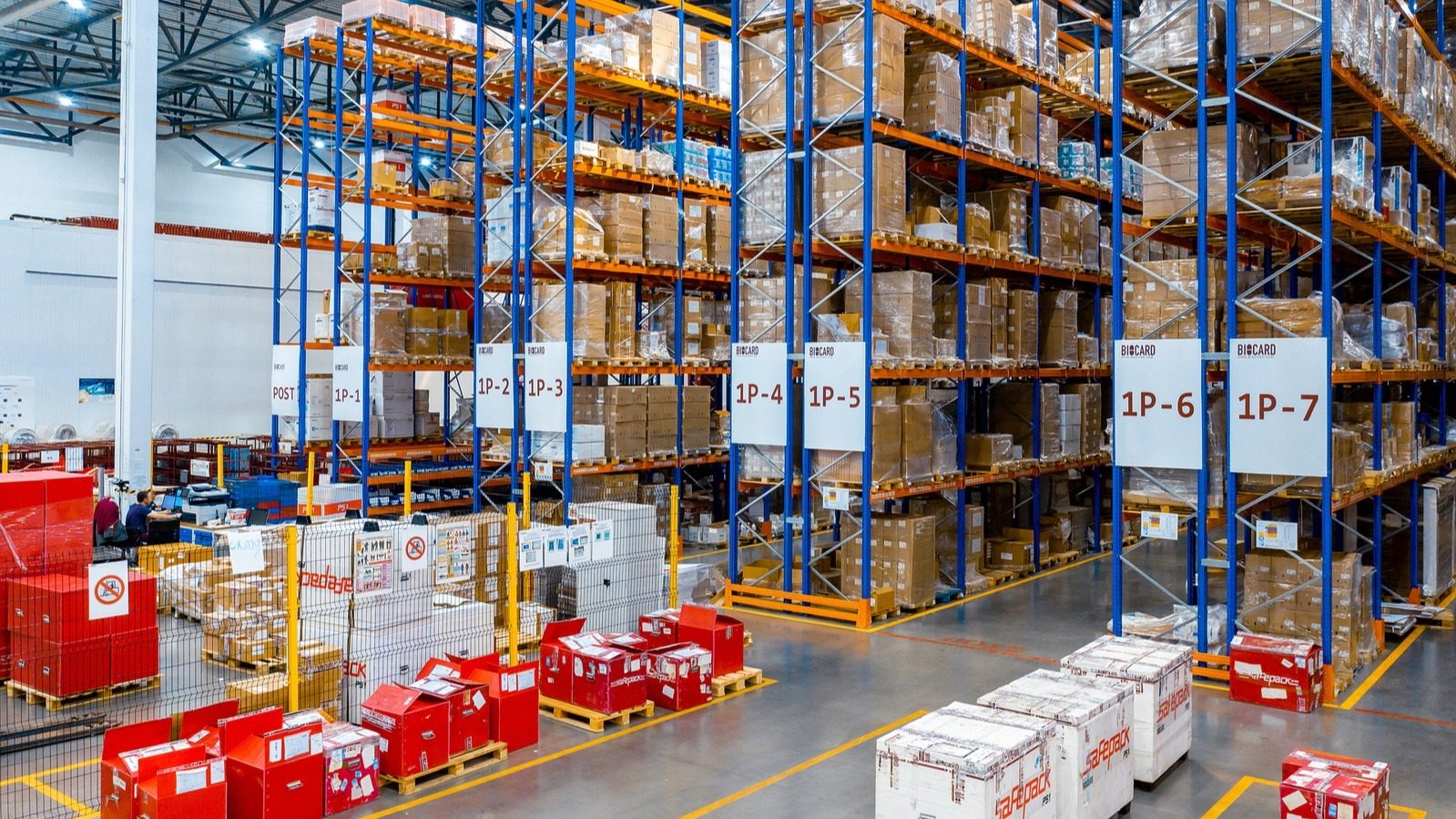
Refrigerated transport is part of a full cycle: a 30,000 m² Class A warehouse in Vyrubovo (Moscow Region), SafePack thermal containers and our own IT team. We do as much of the chain as we can ourselves — a single point of contact for the whole cold chain.
Medicines and vaccines are our core business, not one of many cargo types in a general freight fleet. Pharmaceutical licence, GDP and ISO, and clinical trial experience since 2007.
The sensor record covers the whole route — documentary confirmation of the temperature mode, which is what your quality department and inspectors need.
A Class A warehouse, SafePack thermal containers, scanner-assisted receiving and a branded fleet — the whole chain in one pair of hands.

Successful use of Safepack thermal containers… the best solution today in terms of transport reliability and optimisation of warehouse processes.
Lancet JSC, D. B. Kechko, Logistics Director · 16 April 2019
Among our clients:
Novo Nordisk, Astellas, Gedeon Richter, Lundbeck, Pharm-Sintez, Lancet, KRKA, Teva, Stada, Abbott, Sanofi
A dedicated temperature-controlled truck makes sense when there is already a lot of cargo — from several boxes to pallets and a whole batch. If the volume is small or the shipment is urgent, groupage (LTL) temperature-controlled delivery or a courier shipment is usually the better option. Describe your cargo when you request a quote and we will suggest the most suitable format for your task.
Our refrigerated trucks run in the +2…+8 °C mode (vaccines, insulins, biologics) and the +5…+25 °C mode (controlled). We carry −20 °C frozen cargo rarely and by arrangement — and, as a rule, it is more reliable to do this in SafePack thermal containers, where the temperature holds more steadily when the cargo is reloaded. Deep freezing on dry ice (−70 °C) and liquid nitrogen at −196 °C are a separate service (cryogenic logistics) and are not done by refrigerated truck. We write the required temperature into the contract.
We deliver across Russia. Transit times depend on the route and the volume — we calculate them individually for your route and your shipping schedule. For regular deliveries on one route we set up a predictable schedule.
Our own fleet carries out the main refrigerated transport, and we are responsible for the refrigeration equipment ourselves. Sometimes, on the last leg of the route, we involve trusted contractors, but control of the temperature mode and responsibility stay with us and are written into the contract.
SmartSensor temperature loggers work in every truck: they record temperature, and also humidity, light and shocks, along the whole route. The data is read through a network of receivers in vehicles and warehouses, without opening the cargo. The temperature report is kept in the request card in your personal account (Files tab) once it is attached to the order — ready-made confirmation for a quality check.
Describe the batch, the route and the temperature mode — we will prepare a quote for refrigerated truck transport tailored to your task and show how we will hold the temperature along the whole route.
Send the origin and destination, cargo description, required temperature, piece count, actual weight and outer dimensions. You can ask a question or get an estimate before formal onboarding. The domestic delivery calculator uses the published Russian tariff; international routes, storage and special handling are quoted for the actual task.
Under the public transport offer, acceptance is signed through electronic document exchange before the first transport order. A registration link is then sent to the email in the acceptance, and orders are placed in the client account. If you have no electronic signature or need different contract terms, the manager agrees the contract route. Storage is arranged separately. How to start working with BIOCARD →
Equipment is selected for the cargo, route and conditions. The stated holding time of up to 96 hours applies to selected tested SafePack configurations; it is not a guarantee for every model, load or dry-ice shipment. The manager can provide the test report for the relevant model and range by email. Temperature reports in the client account are available once attached to the order.
Cold-chain delivery for vaccines and immunobiological products, using the manufacturer’s required temperature range.
Door-to-door courier delivery in SafePack thermal containers, with temperature logging and the published 2026 calculator.
Scheduled transport from a box or pallet, with a calculator based on the actual and volumetric weight of each piece.