

Vaccine transportation
Cold-chain delivery for vaccines and immunobiological products, using the manufacturer’s required temperature range.

Cryo transport by BIOCARD: delivery on dry ice (−70 °C) for vaccines, reagents and biosamples; liquid nitrogen (−196 °C) on request.
Cryogenic logistics is the transport of medical cargo at very low temperatures, where an ordinary refrigerator is no longer enough. BIOCARD ships on dry ice at −70 °C (temperature-sensitive vaccines, reagents, frozen biosamples) and, on separate request, in liquid nitrogen at −196 °C in Dewar vessels (cells, IVF embryos, bone marrow, DNA samples, clinical trial materials). Dewar vessels and nitrogen are a rare, highly specialised service arranged for a specific cargo.
We make SafePack thermal containers and SmartSensor temperature loggers ourselves and run a Class A warehouse and our own fleet, so cryogenic cargo travels under our control from point to point with a minimum of intermediaries. On a turnkey basis we take on as much of the logistics chain as possible with our own resources — from choosing the temperature mode to the delivery report. Delivering health!
Our main mode is dry ice at −70 °C. Liquid nitrogen at −196 °C is rare and arranged on request for a specific shipment.
Temperature-sensitive vaccines and mRNA products, diagnostic reagents, frozen biosamples, plasma and sera for research. Dry ice does not melt, it sublimates — the cargo stays dry all the way.
Cell cultures, IVF embryos and reproductive material, bone marrow and stem cells, DNA samples and biobank collections, clinical trial materials. We ship in Dewar vessels under a strict protocol. This is a highly specialised service arranged for a specific cargo.
Frozen patient samples, comparator drugs, reagents and kits that need deep freezing. BIOCARD has worked in clinical trial logistics since 2007 and has had its own customs broker since 2013 for international shipments.
Shipping frozen material between tissue banks, laboratories and IVF clinics. We collect even a single vessel — there is no minimum volume.
Solid carbon dioxide. It sublimates without residue, so the cargo stays dry. Dry ice itself sublimates at about −78.5 °C, and as it evaporates the temperature in the box slowly rises — that is why we label the transport mode as −70 °C. For vaccines, reagents and frozen biosamples this is our main cryogenic mode.
The deepest freezing. A Dewar vessel is a vacuum flask with liquid nitrogen for live cells, embryos, bone marrow and DNA. We ship it rarely, on separate request.
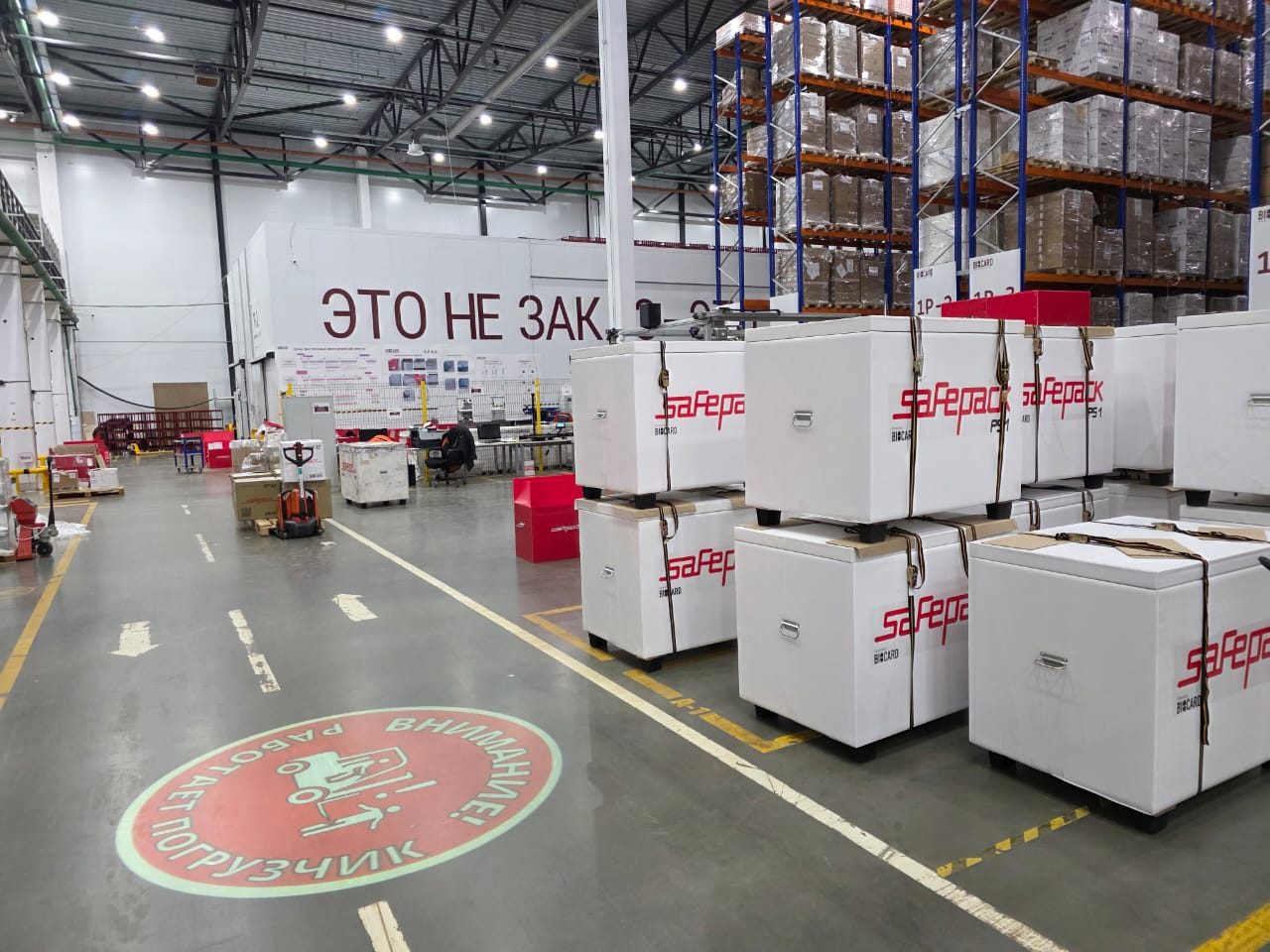
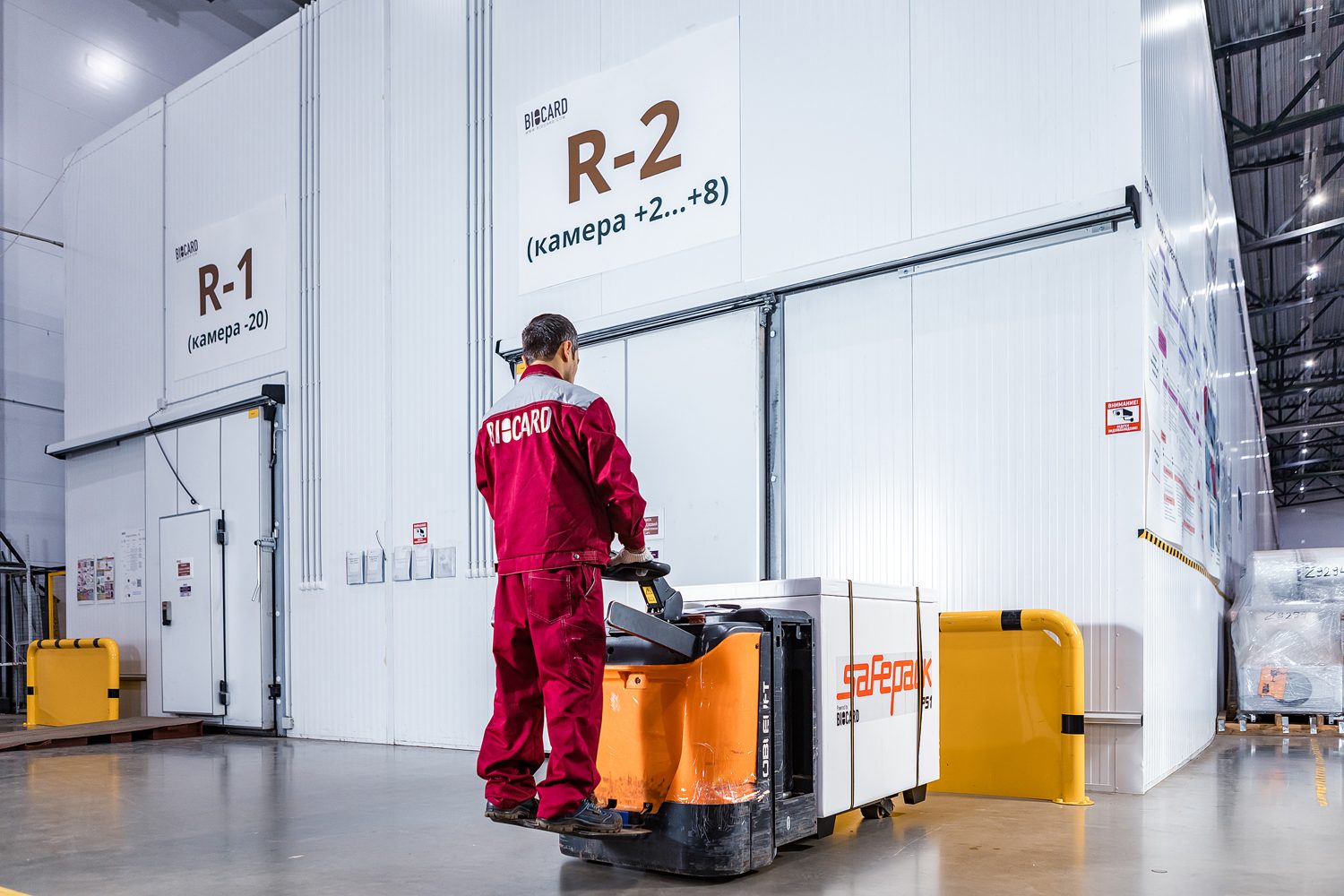
SafePack thermal containers with cool packs or dry ice — for plasma and frozen products (shown here to compare the modes).
Less often, and on request, we also ship in the intermediate +8…+15 °C mode. Dry ice physically gives about −78.5 °C — our people work in thermal gloves.
We establish what the cargo needs: dry ice at −70 °C or liquid nitrogen at −196 °C. For that mode we select a SafePack thermal container of the right size or a Dewar vessel, and calculate enough refrigerant for the whole route, allowing for transit time.
Dry ice is packed with an allowance for sublimation on the way. A Dewar vessel stands upright only and is secured with cushioning so that it touches neither the vehicle walls nor other vessels. A SmartSensor logger goes into the shipment.
SmartSensor logs temperature, humidity, shocks and light (light shows whether the package was opened). The data is read from the sensor through a network of receivers in our vehicles and at the warehouse, and the sensor never needs recharging. The cargo compartment is ventilated, because evaporating nitrogen displaces oxygen.
Our own fleet delivers the cargo to the clinic, laboratory or tissue bank. The sensor record for the route shows whether the temperature mode and the integrity of the package were kept from loading to hand-over; the temperature report is kept in the request card in your personal account (Files tab) once it is attached to the order.
A Dewar vessel with liquid nitrogen at −196 °C is not ordinary packaging, and it has to be shipped under strict safety rules. We follow them on every trip.
Upright only. The vessel is shipped strictly upright — this prevents leaks and contact of liquid nitrogen with non-insulated parts of the vehicle.
Secured with cushioning. Vessels touch neither each other nor the vehicle walls — they are fixed with cushioning pads that absorb vibration and shocks on the road.
A vented stopper, never airtight. A standard stopper insert with channels is used to release nitrogen vapour. Airtight stoppers are strictly prohibited: evaporating nitrogen builds up pressure, and without venting it can rupture the vessel.
Weight and quantity limits. For liquid nitrogen as an inert gas: up to 300 kg in total and no more than 10 vessels per shipment.
Mandatory ventilation. The cargo compartment is properly ventilated: evaporating liquid nitrogen displaces oxygen, and without fresh air that is dangerous for people.
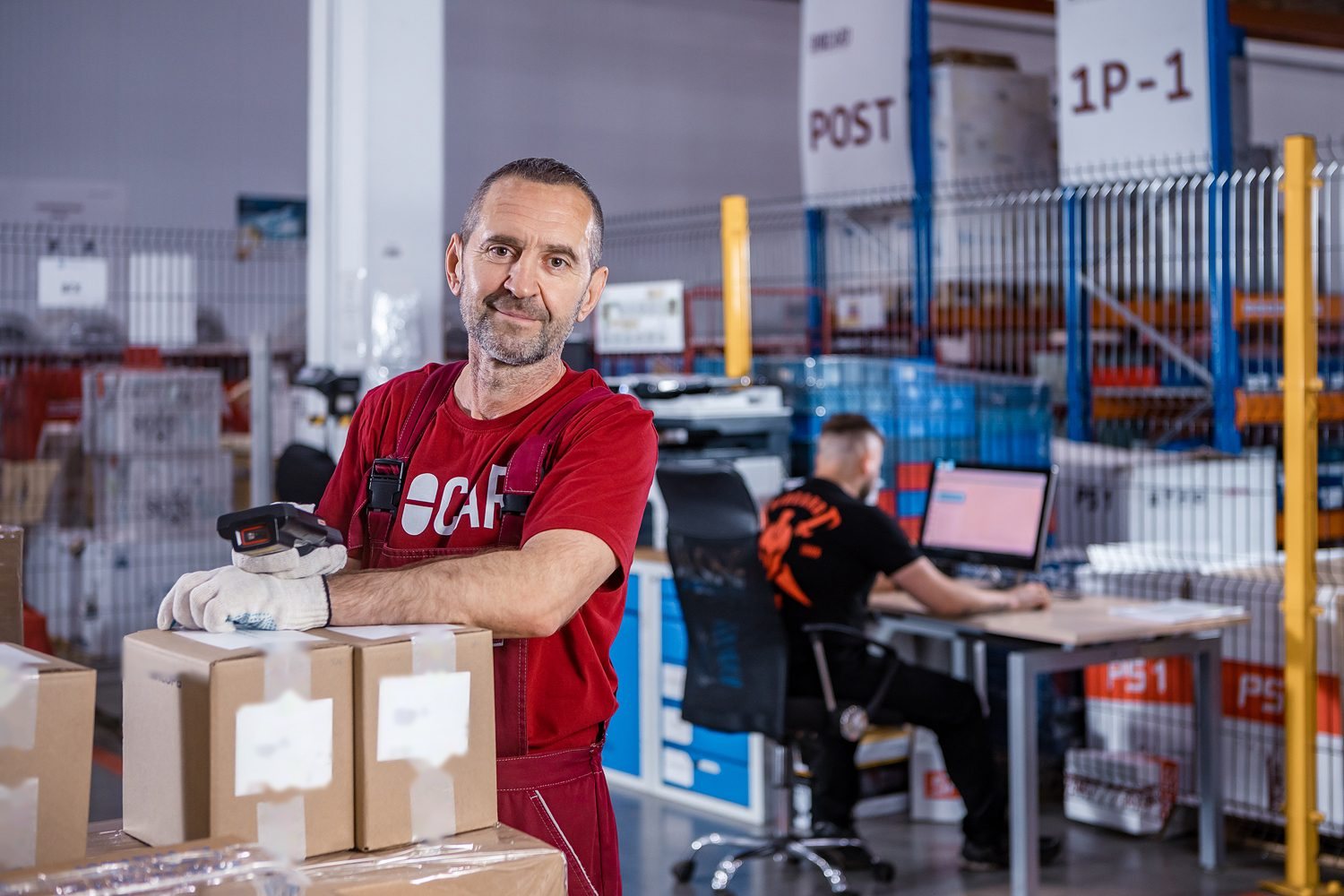
A Class A warehouse, SafePack thermal containers, scanner-assisted receiving and a branded fleet — the whole chain in one pair of hands.
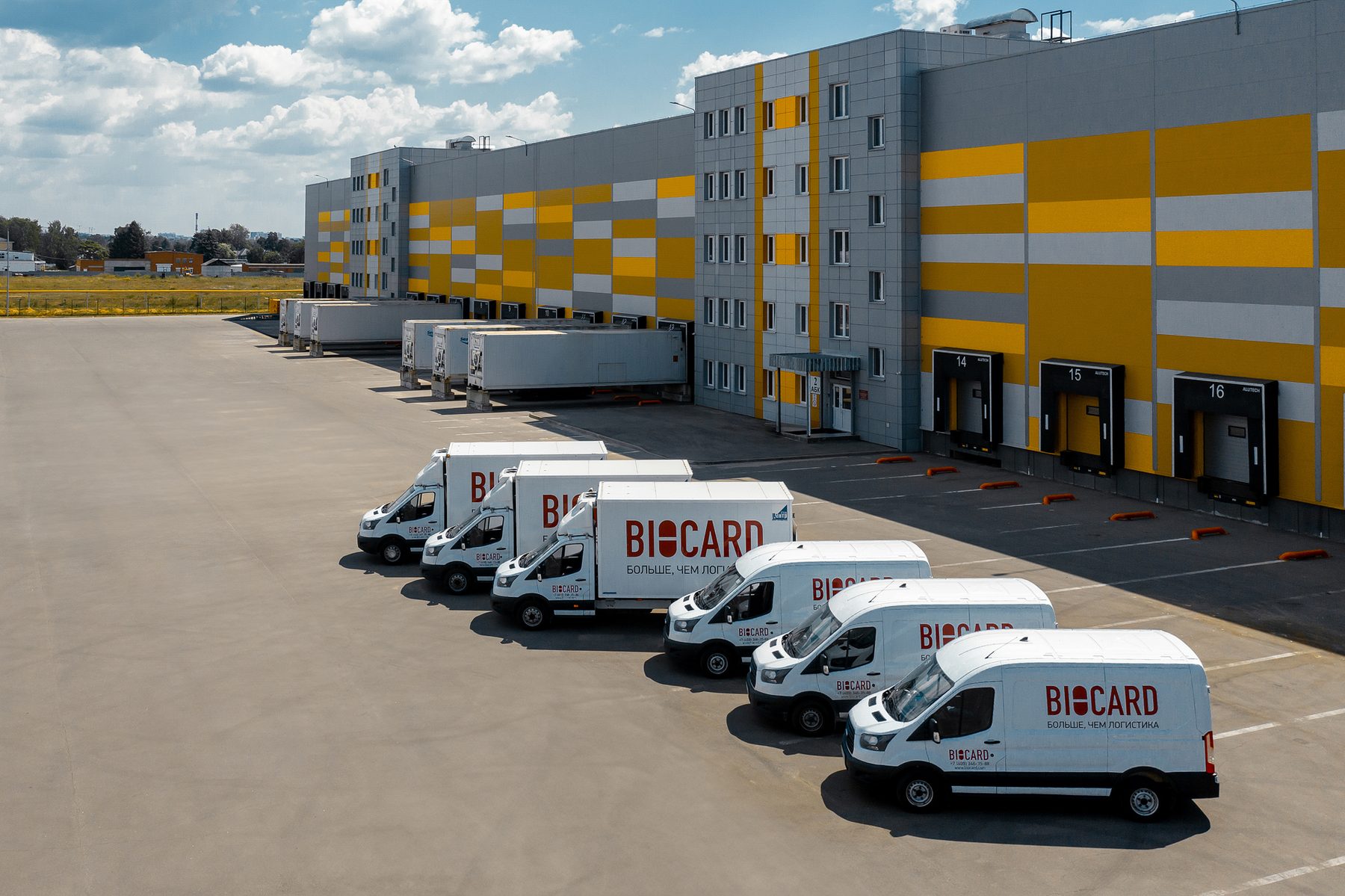
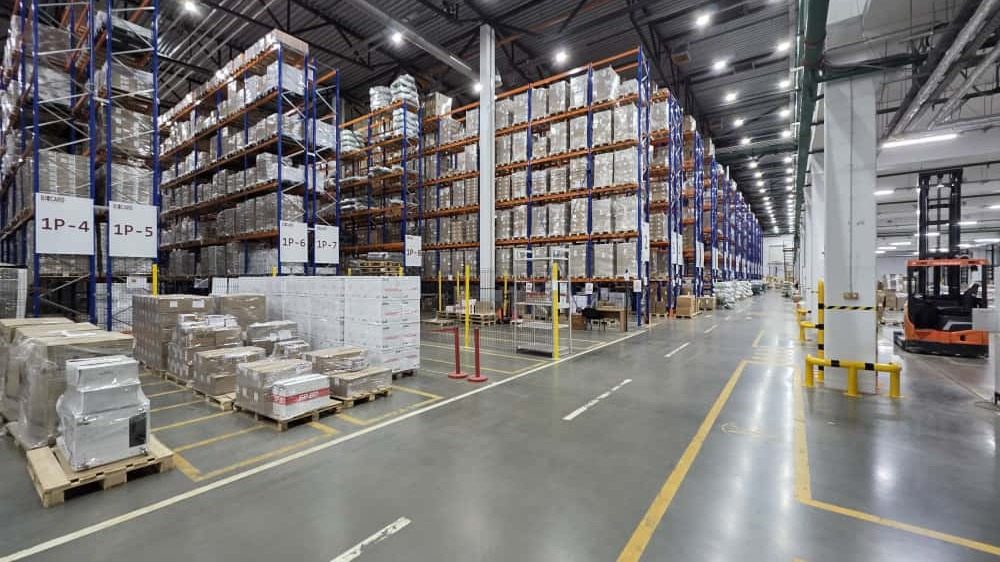
We make SafePack thermal containers and SmartSensor loggers ourselves, deliver with our own fleet and store at a 30,000 m² Class A warehouse in Vyrubovo near Odintsovo. On a turnkey basis we take on as much of the logistics chain as possible with our own resources — fewer intermediaries, more control over your cryogenic cargo.
SmartSensor is a genuine Bluetooth IoT logger: it records temperature, humidity, shocks and light. The light reading shows whether the package was opened. The battery lasts several years with no recharging, and the data is read through a network of receivers in vehicles and warehouses.
Upright transport of Dewar vessels, cushioning, stoppers with channels that vent vapour, ventilation, and a refrigerant reserve calculated for the whole route. Cryogenic logistics demands discipline — ours is well rehearsed.
37 years in pharmaceutical logistics, clinical trials since 2007, our own customs broker since 2013. We ship cryogenic cargo across Russia and internationally — China → Russia, the UAE and the Gulf countries.
Successful use of Safepack thermal containers… the best solution today in terms of transport reliability and optimisation of warehouse processes.
Lancet JSC, D. B. Kechko, Logistics Director · 16 April 2019
Among our partners and clients:
Novo Nordisk, Astellas, Gedeon Richter, Lundbeck, Pharm-Sintez, Lancet, KRKA, Teva, Stada, Abbott, Sanofi. In the cryo segment we also work with tissue banks and reproductive centres.
Cryogenic logistics is transport at very low temperatures, below ordinary freezing. The classic cold chain works in the +2…+8 °C range, while cryo means −70 °C on dry ice and −196 °C in liquid nitrogen. These modes are needed by live cells, embryos, bone marrow, DNA samples and some vaccines and reagents.
Dry ice (solid carbon dioxide) is a transport mode of −70 °C: the ice itself sublimates at about −78.5 °C and leaves no residue, and as it evaporates the temperature in the box slowly rises. It is used for temperature-sensitive vaccines, reagents and frozen biosamples, and it is our main cryogenic mode. Liquid nitrogen in a Dewar vessel gives −196 °C — the deepest freezing, for live material: cells, IVF embryos, stem cells and biobank collections. We ship nitrogen and Dewar vessels rarely, on request for a specific cargo. The choice of mode depends on what exactly your cargo requires.
It is safe when the rules are strictly followed, and we follow them on every trip: the vessel travels upright only, is secured with cushioning, is closed with a standard stopper with channels that vent nitrogen vapour (airtight stoppers are prohibited), and the cargo compartment is ventilated. One shipment carries up to 300 kg in total and no more than 10 vessels.
On dry ice: temperature-sensitive vaccines, reagents and frozen biosamples. In liquid nitrogen (on request): cell cultures, IVF embryos and reproductive material, bone marrow and stem cells, DNA samples, biobank collections and clinical trial materials. We collect even a single vessel — there is no minimum volume.
Yes. In air transport dry ice is dangerous goods UN 1845 (class 9), because it releases carbon dioxide as it sublimates. We calculate the quantity, prepare the paperwork and load it by the rules.
Yes. BIOCARD has had its own customs broker since 2013 and has experience with international shipments. We ship across Russia, on the China → Russia route, and to the UAE and the Gulf countries. We work out the route and the paperwork for the specific cargo and deadline.
Tell us what needs to go where — we will choose the mode (−70 °C or, on request, −196 °C), the packaging and the route, and calculate the transit time and the refrigerant reserve. Turnkey cryogenic logistics with strict safety compliance and a sensor record for the whole route.
Send the origin and destination, cargo description, required temperature, piece count, actual weight and outer dimensions. You can ask a question or get an estimate before formal onboarding. The domestic delivery calculator uses the published Russian tariff; international routes, storage and special handling are quoted for the actual task.
Under the public transport offer, acceptance is signed through electronic document exchange before the first transport order. A registration link is then sent to the email in the acceptance, and orders are placed in the client account. If you have no electronic signature or need different contract terms, the manager agrees the contract route. Storage is arranged separately. How to start working with BIOCARD →
Equipment is selected for the cargo, route and conditions. The stated holding time of up to 96 hours applies to selected tested SafePack configurations; it is not a guarantee for every model, load or dry-ice shipment. The manager can provide the test report for the relevant model and range by email. Temperature reports in the client account are available once attached to the order.
Cold-chain delivery for vaccines and immunobiological products, using the manufacturer’s required temperature range.
Collect and deliver laboratory samples from a single test tube, with shipment-specific packaging and temperature control.
Classify the shipment, confirm acceptance and prepare medical dangerous goods for road or air transport.